The Participatory Stage: Turning Malmö Into a Shared Venue
What happens when you step out of the rhythm of everyday life and imagine, even for just an hour, that a garden hedge, a crow, or the sun could be your teacher?
For six weeks this summer, three international artists from distinct disciplines lived and worked under one roof in Malmö: Sarah Kaushik (Scenographer and Immersive Storyteller), Tangmo Ladapha (Performance Artist), and Nidhi Jacob (People, Product and Play Designer). Brought together for an intensive residency at STPLN, the trio blended their practices to explore how public space can become a site of reciprocity, play, care, and civic conversation.
Site-Responsiveness & Organic Interaction
Rather than bringing heavy, artificial sets into the neighborhood, the artists chose to work directly with what was already there—using subtle, striking interventions like hanging a bright red curtain from a simple wall hook or guiding non-verbal movement exercises with passersby, locals, and curious children.
For performance artist Tangmo Ladapha, site-responsiveness is about listening to a space before trying to change it.
"I try to see what is already in the environment and grow from there," Tangmo explains. "When simple tools open up organic, unplanned interactions, that interaction itself becomes the performance. My goal is to make art that lingers after it’s gone—shifting how people look at a bench, a tree, or a street corner long after the showcase is over."
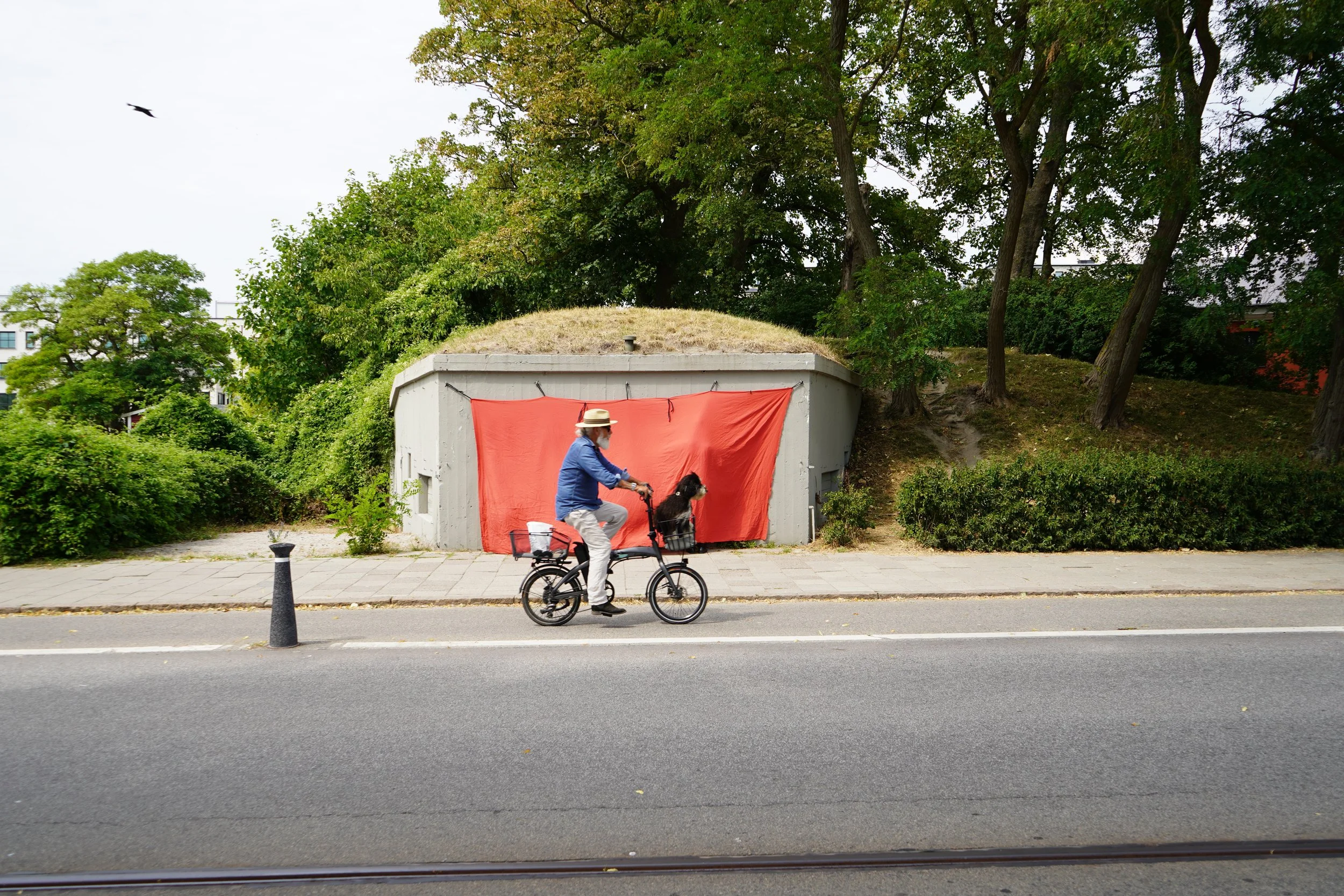
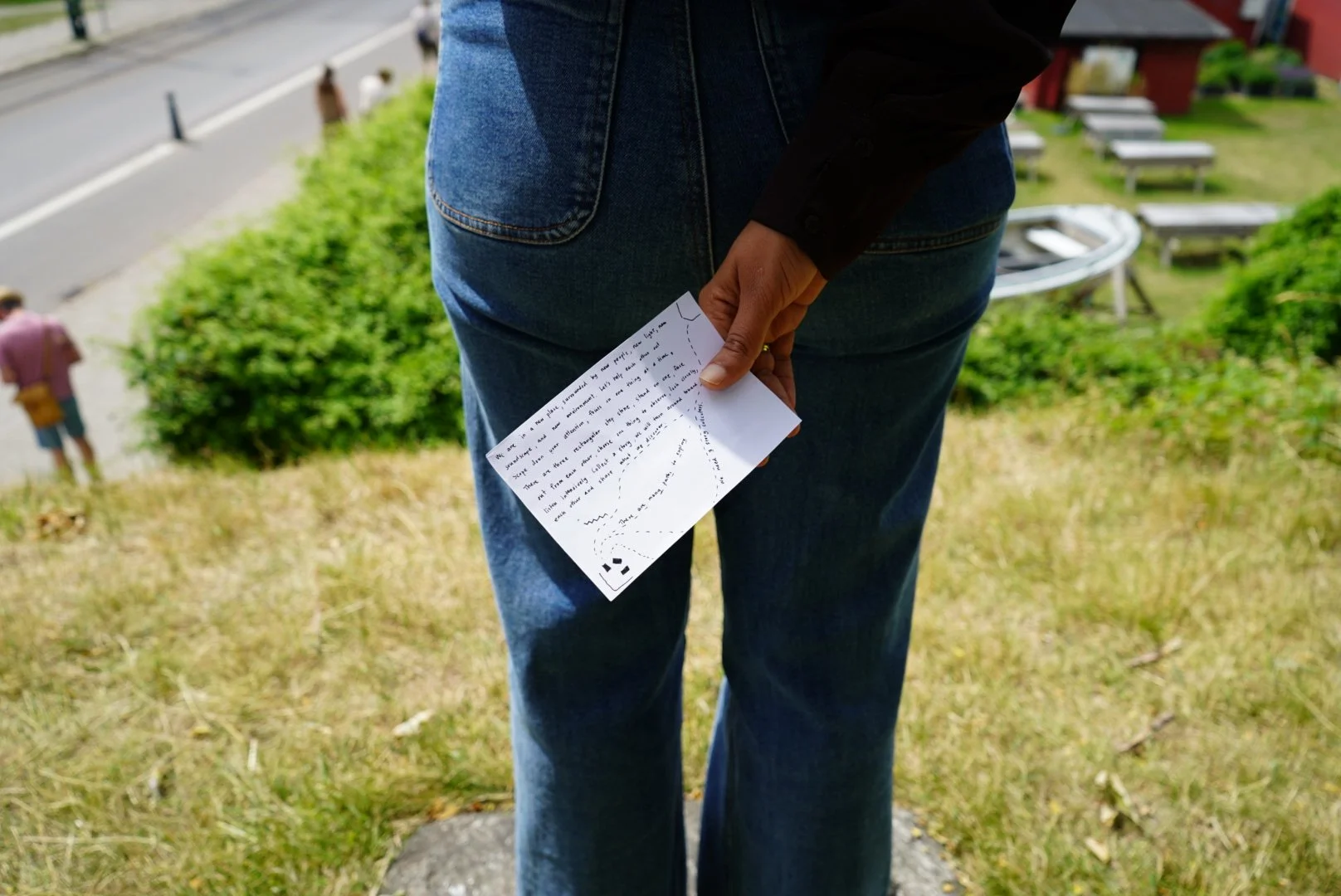
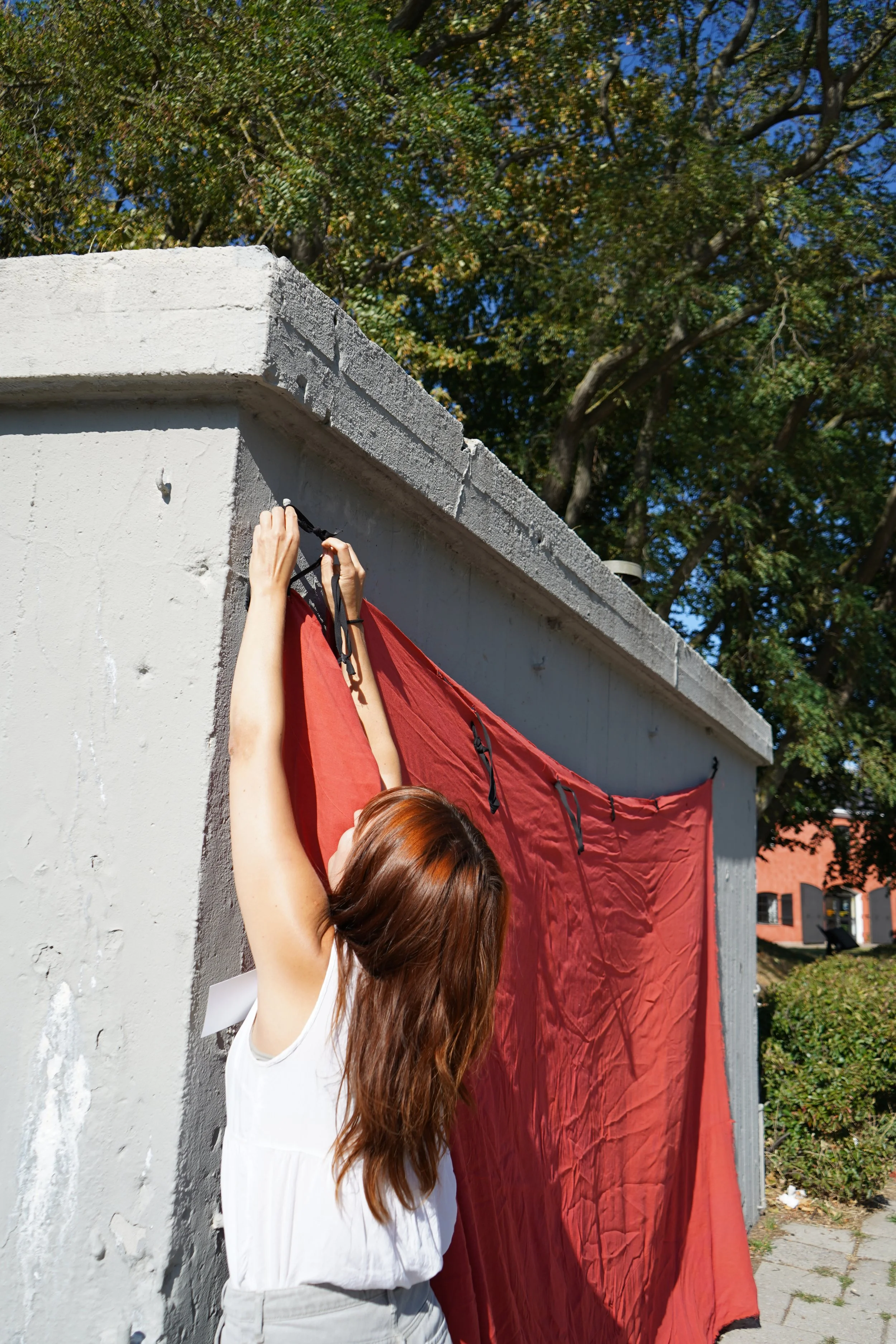
Transitioning from individual artistic practices into a shared, immersive process brought both creative chemistry and deep self-reflection. Living together as housemates while navigating common themes of "home," "safety," and "belonging" across different migratory backgrounds acted as a constant mirror for their ways of working.
For visual artist Sarah Kaushik, navigating what "true collaboration" means required letting go of rigid artistic authority and rethinking her role relative to the audience.
"Coming from a solo practice, working collaboratively forced me to question my role," Sarah reflects. "Instead of controlling how an experience is had, I learned to be a space holder—holding the participant’s hand gently at first to share a way of seeing, and then letting go so they have the agency to imagine on their own."
This shift in authority sits at the very core of participatory theatre. As residency mentor Annita Douka points out, transforming spectators into active participants reshapes how we navigate public space as a whole:
"Participatory theatre shifts the dynamics of what we are used to considering traditional theatre," says Annita. "The spectators become part of the interaction and actively shape the performance. It opens up the ways we, as citizens, are expected to act with and towards others in public space—rethinking the agency we have to affect the world around us, especially collaboratively."
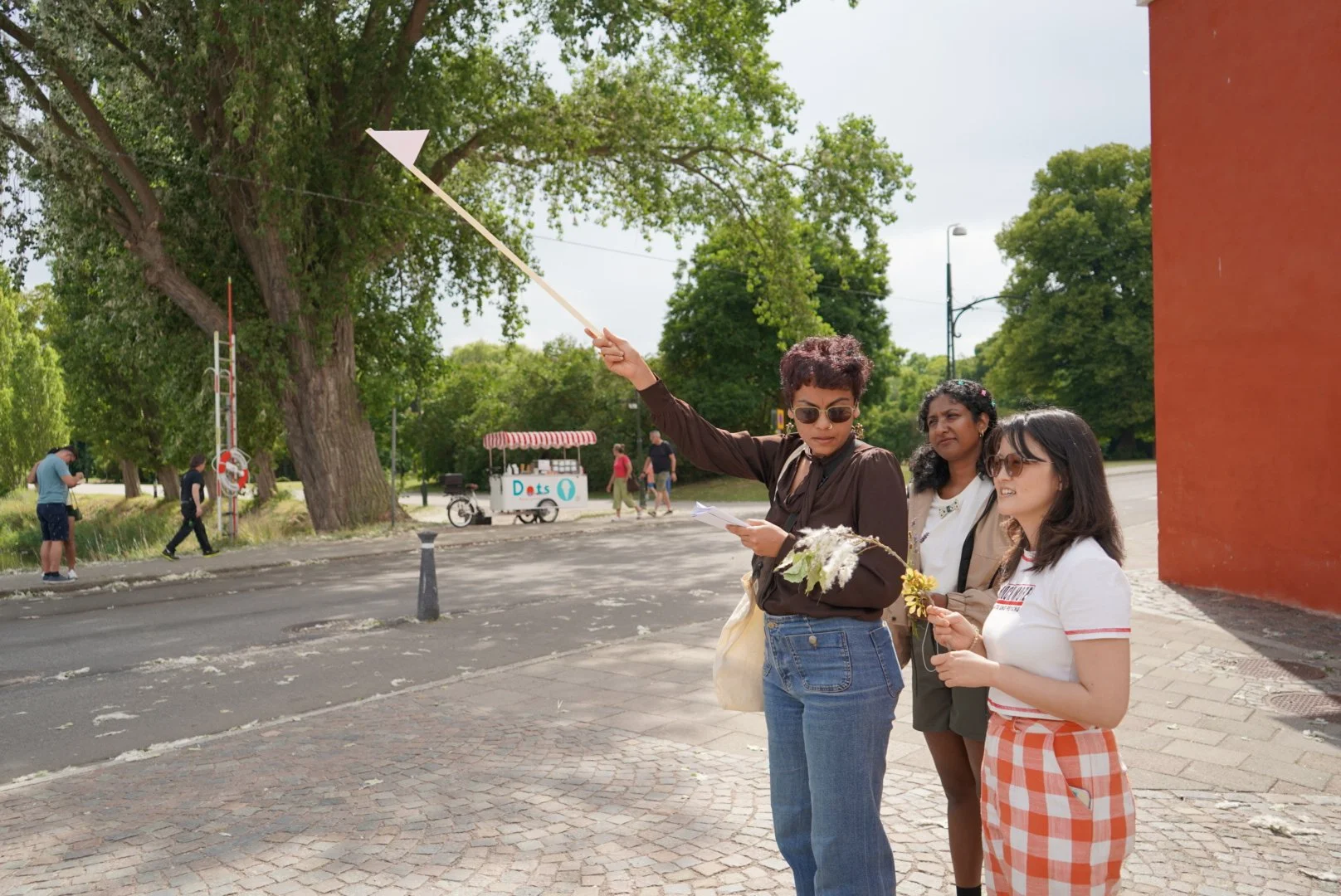
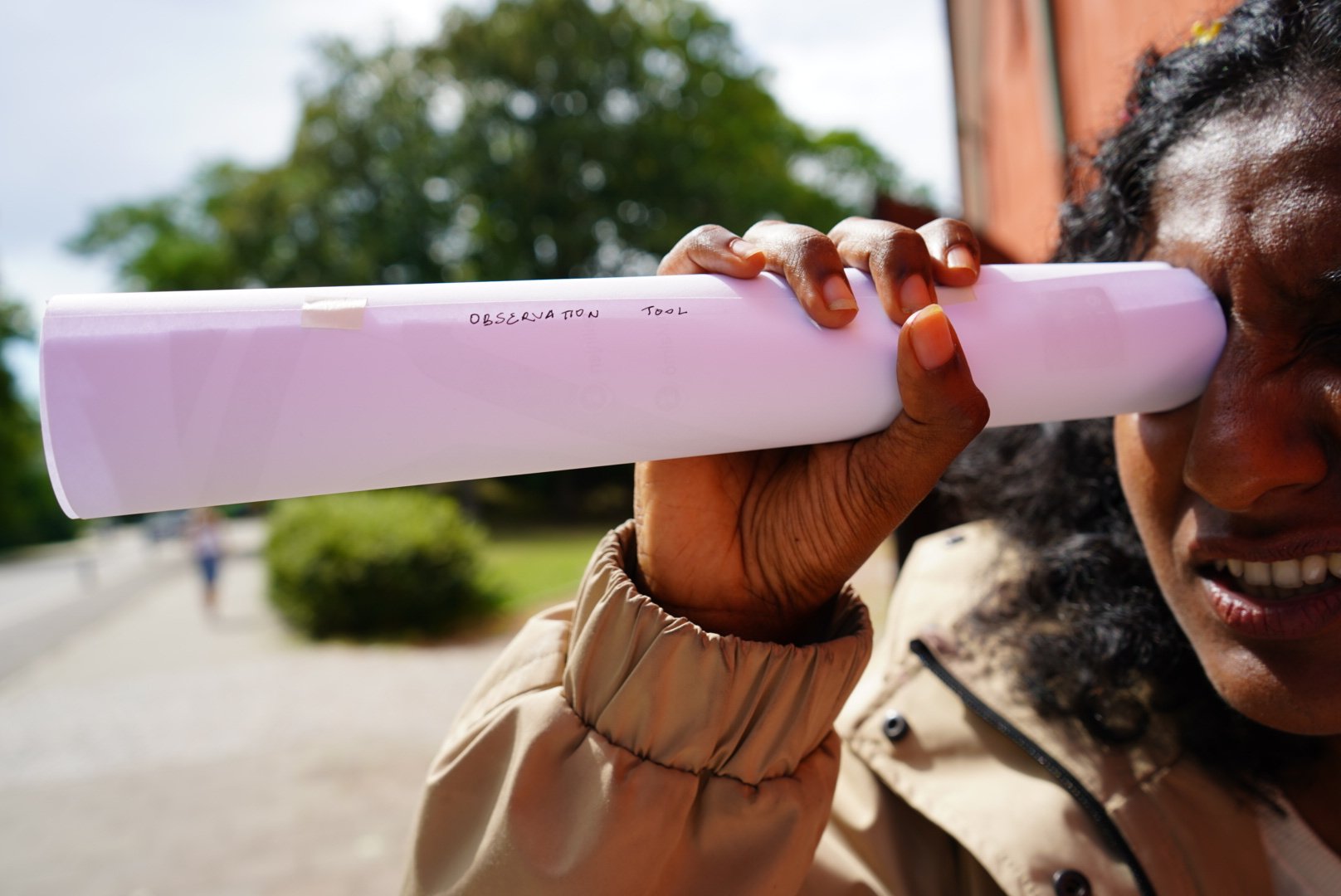
Play as a Universal Bridge: Neurodivergent Accessibility & Consent
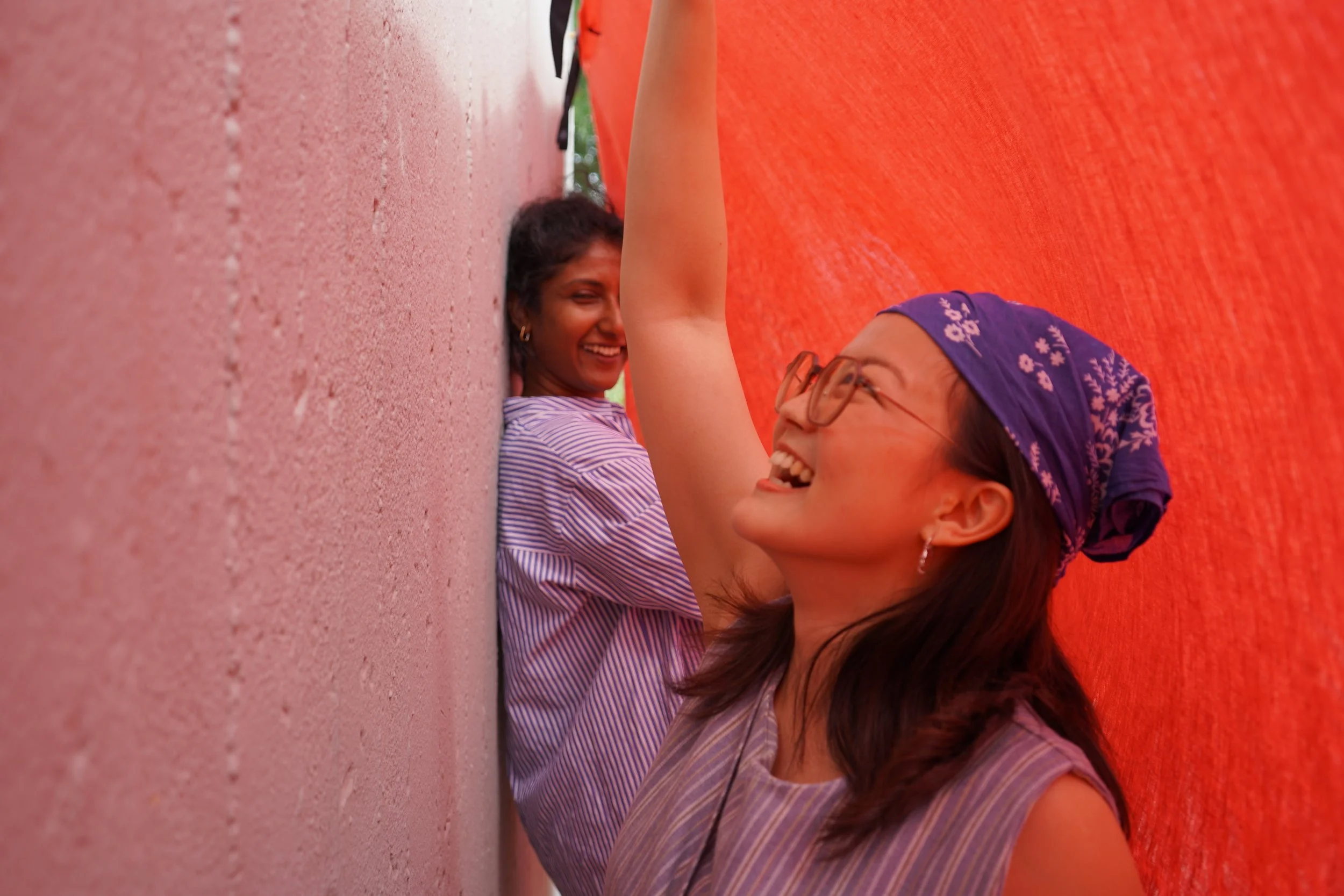
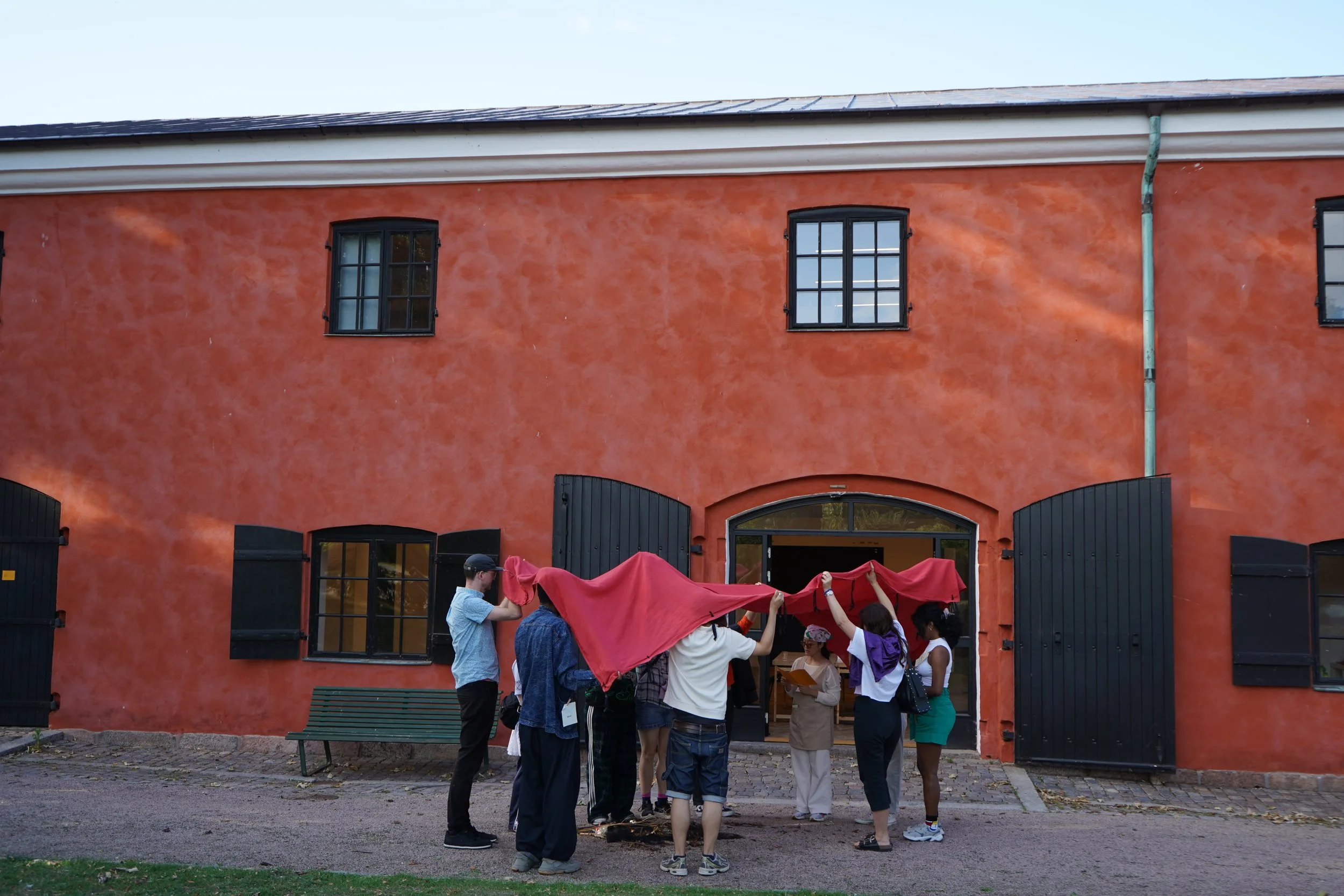
Using play as their core medium allowed the team to cross linguistic and cultural barriers organically, creating immediate bonds with participants of all ages.
"When you communicate without words through play, it creates an immediate bond—it’s how kids make friends," shares play designer Nidhi Jacob. "Because we come from three different migratory backgrounds, playing with these ideas is deeply personal. It allows us to explore belonging in a way that feels honest and accessible."
A critical breakthrough during their prototyping phase was designing for different comfort levels and neurodivergent accessibility. Recognizing that public interaction can feel intimidating, the team made sure that observation was honored just as much as active participation.
"Choosing not to participate is also a form of participation," Nidhi emphasizes. "We focused heavily on levels of consent and how to make people feel comfortable even if they just want to observe—accommodating everyone’s wishes without making anyone feel exposed or out of place."
STPLN as a Lab for Process & Imperfection
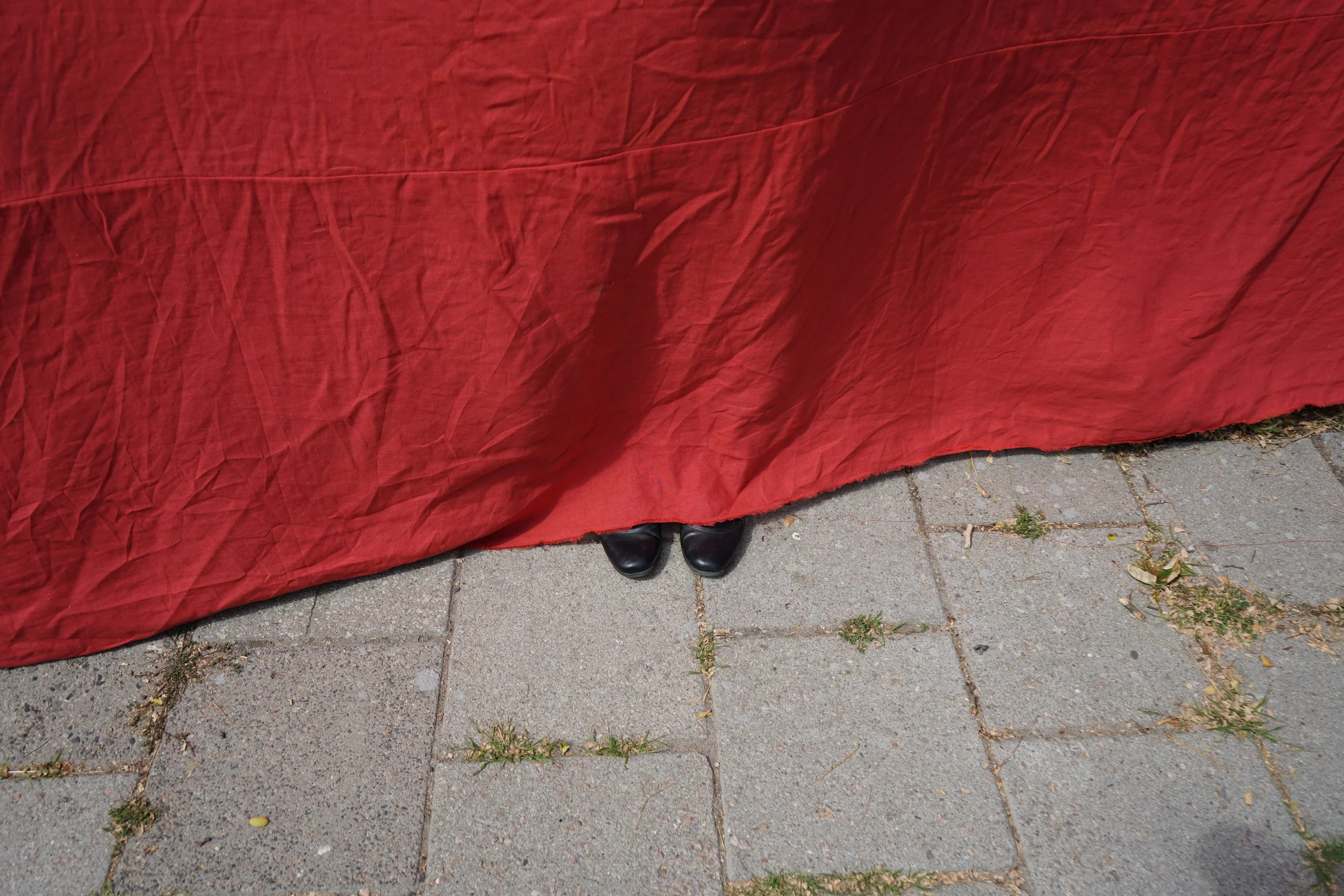
Throughout their residency, the artists mapped outdoor spaces around Malmö, ran prototyping sessions with fellow artists, and tested unpolished ideas directly with the public. For STPLN and the mentorship team, structuring the residency around process rather than a static, finished product was essential to fostering a dynamic cultural ecosystem.
"Understanding how an artistic project evolves from an idea to a complex 'final' product makes it more human and relatable," Annita reflects. "Exposing the process and the infinite scenarios towards which it can evolve is part of the work itself. Participation is messy because it is colored by the various experiences of the humans and more-than-humans that take part in it. As is life."
"Nurturing a dynamic cultural ecosystem requires open spaces where artists can experiment alongside the public without the pressure of a finished product," adds STPLN Director Sanna Lilie. "STPLN provides the lab environment needed to activate public green spaces and test theatre as a tool for civic exchange."
Funders